
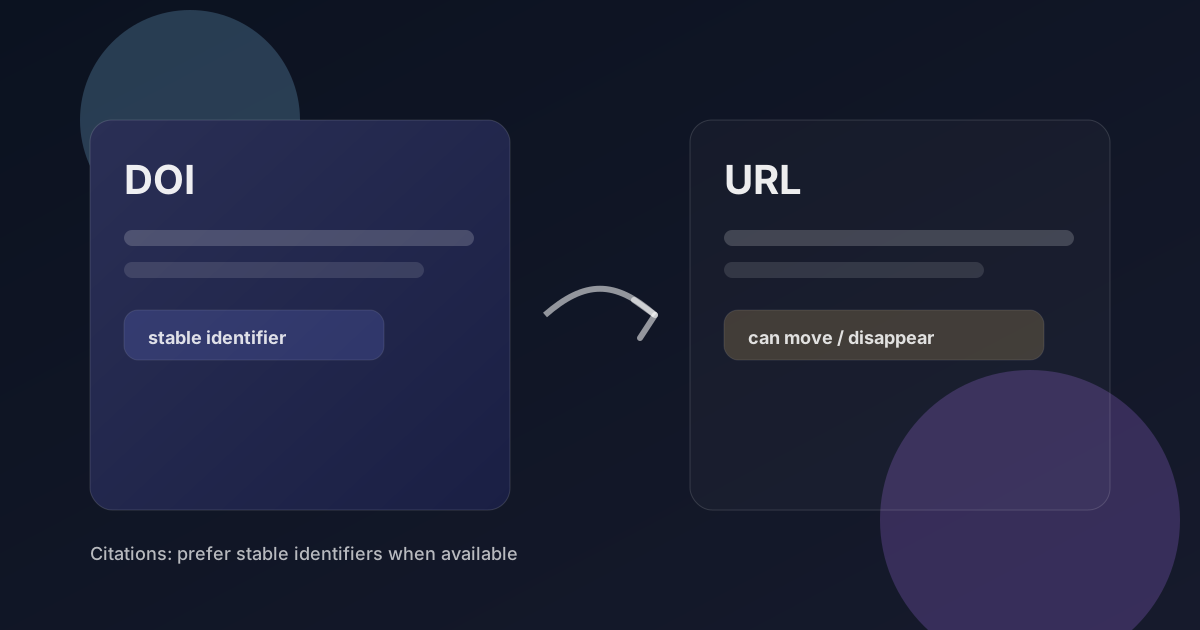

If you want readers to trust your work, make it easy for them to verify it. That’s the whole point of citations. The simplest upgrade you can make is choosing stable identifiers when they exist.
A simple rule: prefer stable identifiers over links
- If a DOI exists, cite the DOI (not a random PDF mirror).
- If PubMed has a PMID, include it for biomedical work.
- If it’s a book, use ISBN (and optionally an official catalog link).
- Use a URL when the work is genuinely “web-native” (spec pages, docs, datasets, government pages).
Why URLs fail in practice
URLs change, redirects get removed, paywalls appear, and copies spread. A DOI is designed to be resolvable even when the hosting location changes.
When a URL is the right answer
- Standards/specs (often no DOI).
- Official documentation pages and release notes.
- Datasets and model cards hosted in an official registry.
- Government or organizational policy pages (record an “accessed at” date).
60-second citation verification workflow
- Start from the identifier (DOI/PMID/ISBN) if available.
- Confirm the title + authors + year match what you expect.
- If you only have a URL, follow redirects and confirm final domain is official.
- Record the identifier and the access date for web-native sources.
Tools can speed this up by resolving identifiers and surfacing mismatches. The important part is the conservative decision: if metadata doesn’t match, treat it as “needs review,” not “close enough.”