
Insights
Short, practical posts on AI, security, productivity, and modern web tooling. We keep the tone conservative: when the evidence is incomplete, we say so.
Featured deep dives
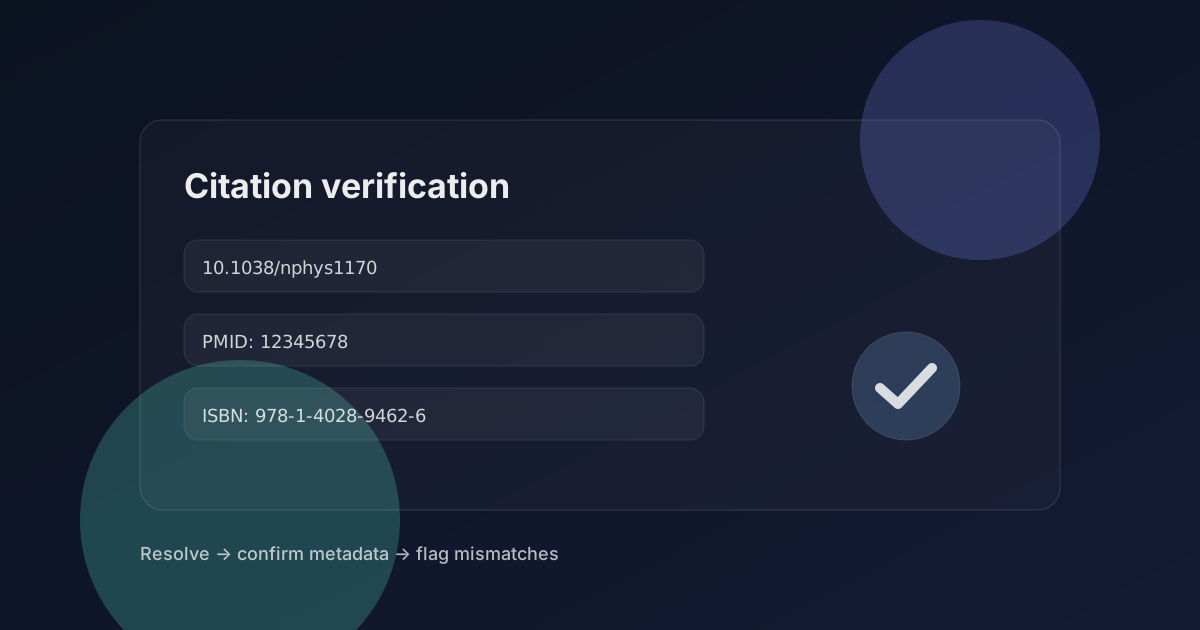

How to fix broken citations: dead links, missing DOIs, and ambiguous references
A practical cleanup workflow for researchers and editors: resolve dead links, recover identifiers, reduce ambiguity, and produce a bibliography others can verify.
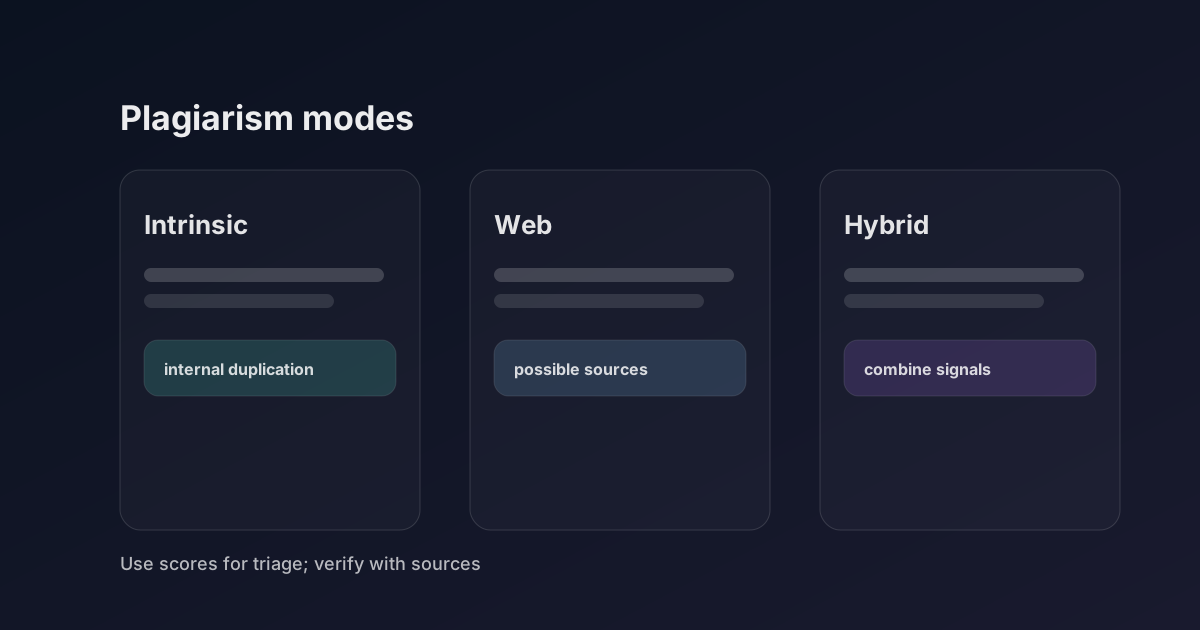
Plagiarism checker modes: Intrinsic vs Web vs Hybrid (what each is for)
If a plagiarism score “feels wrong,” it’s often a mode mismatch. Here’s when intrinsic signals are enough, when web sources matter, and how to interpret results conservatively.
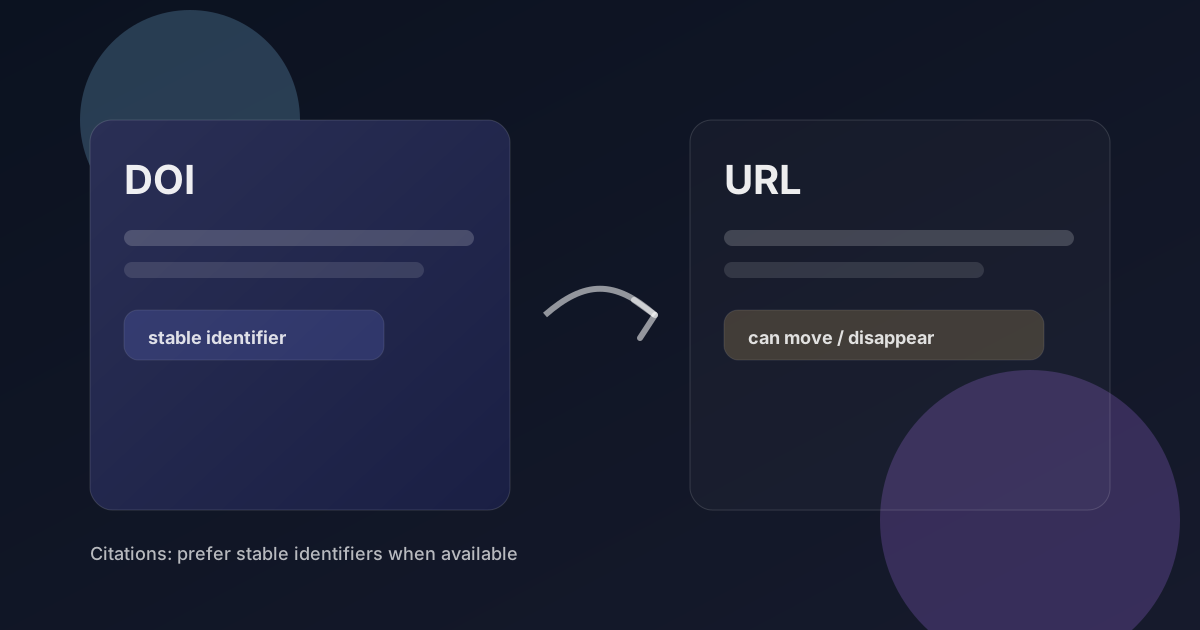
DOI vs URL: what to use when citing online (and why it affects trust)
A practical rule set: prefer stable identifiers (DOI/PMID/ISBN) when they exist, and use URLs carefully when they don’t. Includes a quick verification workflow.

A DOI resolves but the metadata doesn’t match: how to debug citation drift
If the DOI “works” but the title/authors/year are wrong, you likely have citation drift. Here’s how to diagnose mismatches quickly and fix them conservatively.
Self-plagiarism and duplicate publication: how to check safely (and what to do)
A conservative, practical guide for authors and editors: what self-plagiarism is, what reuse is normal, and how to use similarity checks without overreacting.

Missing citations in a draft: a claim-first workflow that scales
Stop guessing where citations “should go.” Use a claim-first pass to find the sentences that need evidence, map them to sources, and label uncertainty safely.
How to fix broken citations: dead links, missing DOIs, and ambiguous references
A practical cleanup workflow for researchers and editors: resolve dead links, recover identifiers, reduce ambiguity, and produce a bibliography others can verify.
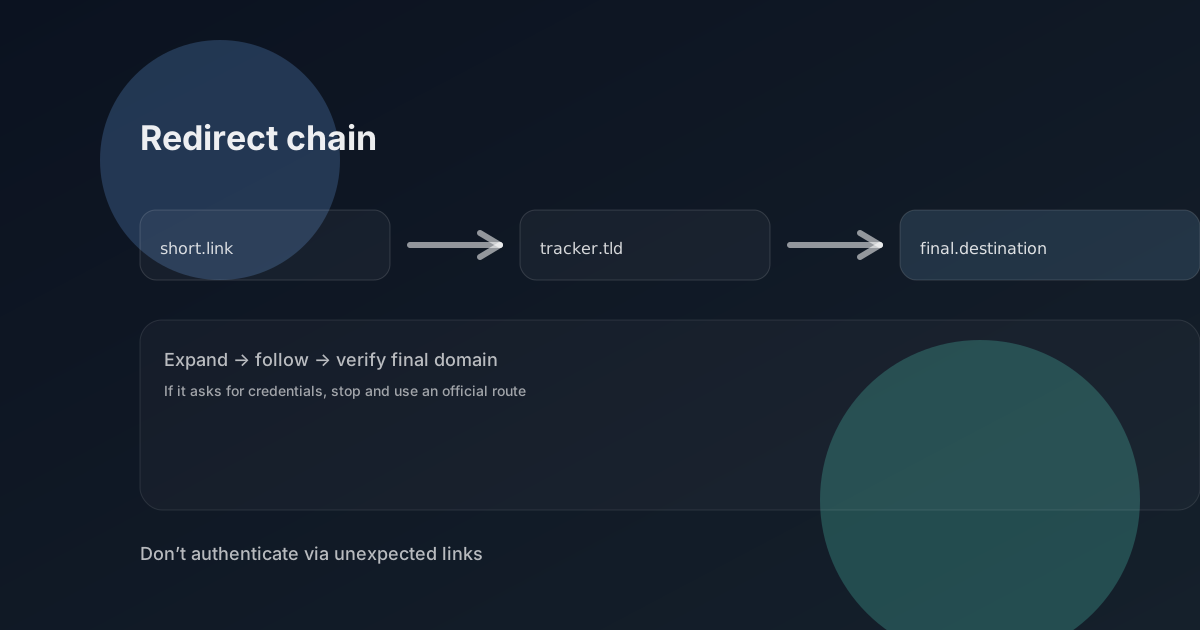
Redirect chains and link safety: how to investigate without clicking blindly
Attackers hide behind redirects and short links. Learn how to expand, follow, and interpret redirect chains safely and when to stop and verify via an official route.
AI content detectors: what they can (and cannot) tell you
AI-likeness scores are not proof. Learn the right use case: prioritizing review and spotting patterns, with clear limits and best practices.
How to check if a paper was retracted or corrected (fast, practical)
Retractions and corrections happen. This guide shows how to spot them quickly and how to update your work responsibly without overreacting.
Why plagiarism scores change: templates, paraphrases, and “false positives”
Plagiarism detection is noisy. Learn the common reasons scores jump around (boilerplate, reused structure, paraphrases) and how to build a sane review workflow.
Plagiarism checker modes: Intrinsic vs Web vs Hybrid (what each is for)
If a plagiarism score “feels wrong,” it’s often a mode mismatch. Here’s when intrinsic signals are enough, when web sources matter, and how to interpret results conservatively.
How to verify a citation fast (DOI/PMID/ISBN): a conservative checklist
A fast, repeatable process to confirm whether a citation is real and whether the metadata matches the claim. Designed for researchers, editors, and teams under time pressure.
DOI vs URL: what to use when citing online (and why it affects trust)
A practical rule set: prefer stable identifiers (DOI/PMID/ISBN) when they exist, and use URLs carefully when they don’t. Includes a quick verification workflow.
A simple data retention policy for small online tools (that users can trust)
Retention is a trust topic. Here’s a straightforward approach: minimize storage, separate logs from content, and clearly state defaults + exceptions.
Rate limits and retries: how to build reliable automation without getting blocked
If you integrate with public APIs or tools, rate limits are normal. This post covers backoff, idempotency, and safe batching so automations keep working.
What HTTP caching means for tool accuracy (and why “stale” isn’t always bad)
Caching makes the web fast, but it also affects freshness. Learn the basics so you know when to trust results and when to force a re-check.
How to spot phishing links fast (without becoming a security expert)
A 60-second link triage process: redirects, lookalike domains, downloads, and when to stop and verify via official sources.

How to evaluate browser extensions safely (a practical checklist)
Extensions can read and modify what you see. Here’s a simple process to reduce risk: permissions, provenance, update behavior, and what to avoid.
Browser privacy basics for online tools (practical, not paranoid)
If you paste text into a web tool, what should you assume? A pragmatic guide to minimizing risk without killing productivity.
Prompt injection basics (for real-world tools, not demos)
What prompt injection is, why it matters outside of chat apps, and the practical mitigations that actually reduce risk in production systems.
AI sources are not citations: how to treat model outputs responsibly
A practical guide to handling AI answers in research and writing: how to verify claims, when to cite primary sources, and what “uncertainty” really means.