
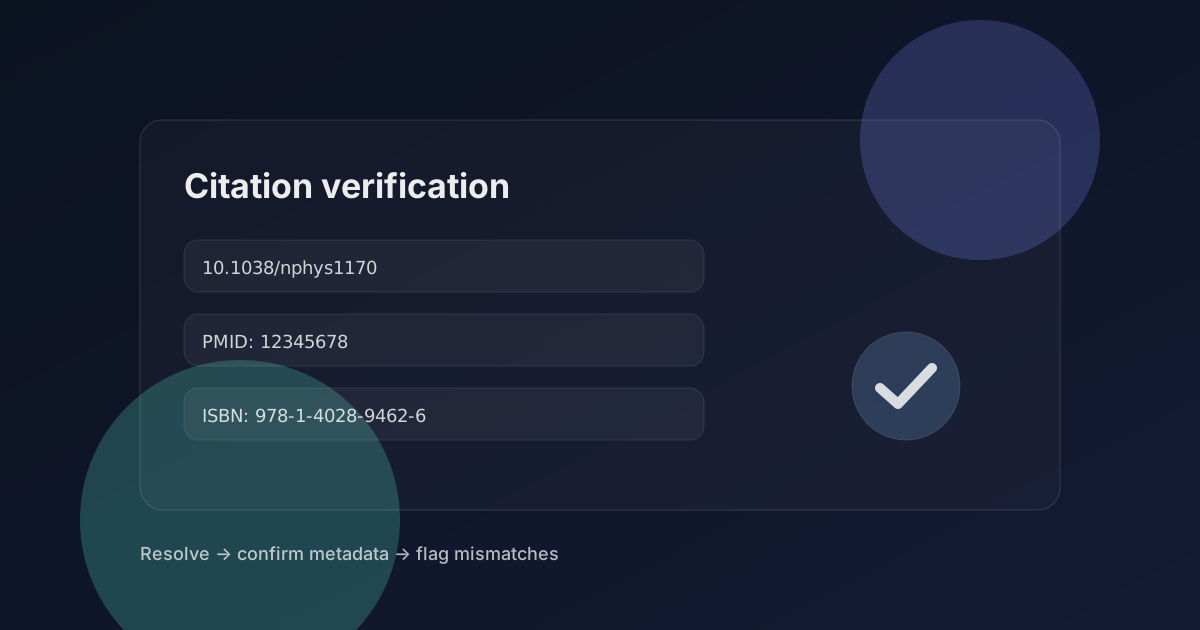

A surprising amount of citation “fraud” is unintentional: copy/paste drift, wrong year, wrong DOI, or a real paper attached to the wrong claim. A conservative verification pass catches most issues quickly.
What “verified” means
- The identifier resolves (or the work can be found reliably in an official index).
- Title/authors/year/venue match the citation line you were given.
- If the claim is important, you can locate the relevant section in the work (not just the abstract).
The fast checklist
Citation verification (fast pass)
- Resolve the DOI/PMID/ISBN from an official registry or index.
- Confirm metadata: title + year + first author.
- Check for retraction/correction flags when applicable.
- If it’s a URL citation, follow redirects and confirm final domain.
- If anything mismatches, label it “needs review” and do not treat as evidence yet.
Most common failure mode
A real DOI that points to a paper on a related topic — but not the claimed result. That’s “citation drift.” The fix is reading the relevant section, not trusting the identifier alone.
What to do when you can’t verify quickly
- Downgrade certainty in writing (“we could not verify…”).
- Ask for the original source from the author (PDF, archive link, or identifier).
- Replace the citation with a better primary source if possible.