

Self-plagiarism is a confusing term because it mixes two different concerns: (1) reuse of your own text without disclosure and (2) duplicate publication of substantially the same work. Similarity tools can help, but only if you interpret them with context.
A conservative workflow avoids two mistakes: treating any overlap as wrongdoing, and ignoring meaningful duplication because “it’s my own writing.” The goal is clarity and integrity: readers should understand what is new, what is reused, and what is being cited.
What reuse is normal (and often expected)
- Methods sections that follow standard language for instrumentation or protocols.
- Background definitions and domain boilerplate (especially in regulated or technical fields).
- Preprint → journal workflows where the final version builds on the earlier one (with disclosure).
- Thesis chapters adapted into papers (common, but should be disclosed and cited).
What typically triggers problems
- Large reused blocks in the results/discussion without clear disclosure.
- Submitting substantially the same manuscript to multiple venues (duplicate publication).
- Reusing figures/tables without permission or without labeling the source and version.
- Reusing text that changes the implied novelty (“new” claims that were already published).
The core issue is not “reused words.” It’s misleading readers about novelty, provenance, and what evidence is actually new in this work.
How to run a similarity check without false alarms
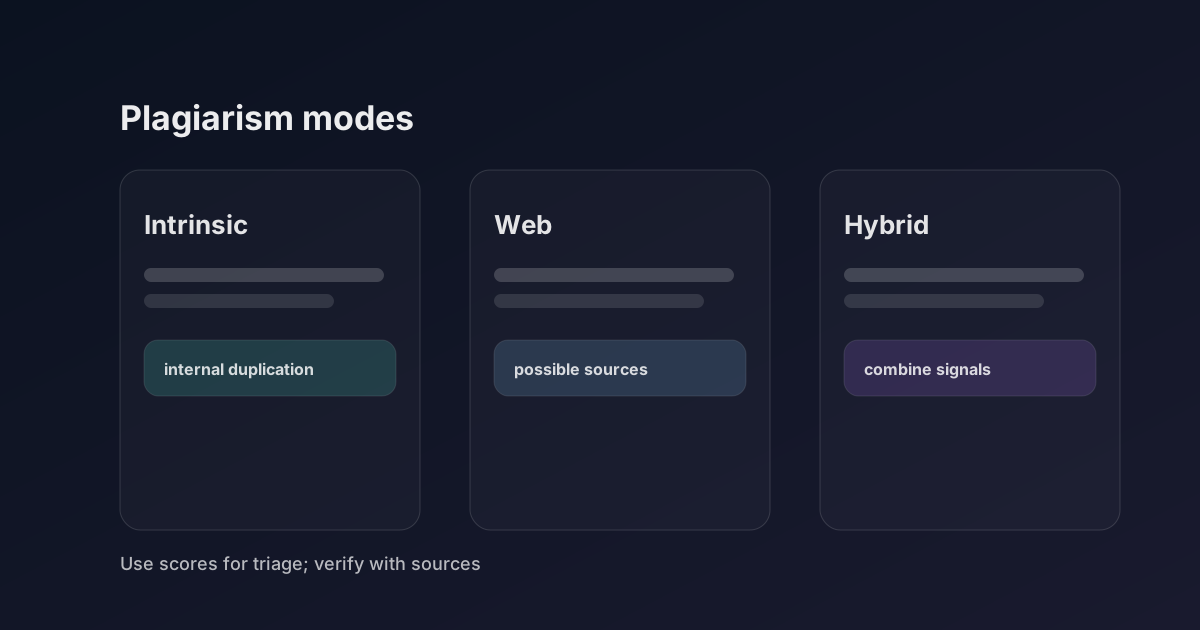
Start by choosing the right mode. Intrinsic similarity is often the safest first pass for self-reuse because it highlights repeated phrasing and templated segments without over-indexing on public web matches.
- Run Intrinsic mode first for internal repetition and self-similarity.
- If the content is public and you want external leads, follow with Hybrid.
- Review excerpts/sources rather than fixating on a single score.
- Expect boilerplate: disclaimers, definitions, and standard intros often dominate overlap.
How to interpret overlap (what to look at first)
- Location: overlap in methods/background is usually less concerning than overlap in results/claims.
- Distinctiveness: unique phrasing and specific numbers are higher-signal than generic wording.
- Distribution: a few copied paragraphs are different from light overlap across an entire paper.
- Disclosure: a reused block is much less risky when it is cited and clearly labeled as adapted.
What to do when you find meaningful reuse
- Add disclosure and citations to the prior work (most important step).
- Rewrite reused background to be shorter and more specific to the current paper.
- Move repeated material to a methods appendix or cite a protocol/reference instead of repeating it.
- For reused figures/tables: label the original source and confirm permissions/licensing.
For editors, a calm “request clarification” step beats immediate escalation. Ask the author to describe what is new, what is reused, and where the earlier version is published (preprint, thesis, prior paper).
A simple decision policy for teams
- Core results/claims are substantially duplicated without disclosure.
- The manuscript represents reused work as new/novel without citation to the prior version.
- The overlap includes figures/tables reused without attribution or permission.
- There are multiple submissions/versions with unclear provenance.
- Overlap is dominated by templates, definitions, or standard methods boilerplate.
- Reuse is disclosed and properly cited (preprint → journal is a common legitimate path).
- The overlap is limited and the novelty claim remains accurate.
Use “overlap that needs review” rather than “plagiarism.” It keeps the process fair and puts the focus on what’s actionable: novelty, provenance, and disclosure.